As someone who moved from electrical engineering into sustainability writing, I track how Solar & Renewable Energy products move from concept to compact, usable tech for homeowners. In 2025 the market for small-scale solar trackers is maturing fast. Homeowners want higher yield from limited roof area, better shade handling, and a way to squeeze more energy out of sloped or oddly-oriented roofs without a full redesign of their solar layout.
Trackers are devices that tilt or rotate solar panels so they follow the sun through the day. They come in single-axis and dual-axis forms, and in small sizes appropriate for residential installations. While full-size commercial trackers aim for large fields, compact residential trackers prioritize low weight, minimal roof loading, quiet motors, and safety on sloped surfaces. They matter because many homeowners face partial shading from trees or chimneys, and fixed-tilt arrays can leave energy on the table.
Compact trackers can increase daily energy harvest by 15 to 40 percent compared with fixed arrays, especially on roofs with suboptimal orientation. For Solar & Renewable Energy enthusiasts who want better ROI, trackers are often one of the highest-impact upgrades per square meter of PV. The last two years has shown a push toward modular micro-trackers and integrated tracker-inverter combos that make installation simpler for sloped roofs and tight spaces.
In this review I test and compare four commercially available compact tracking solutions that are relevant for residential roofs, especially those with shading or slope challenges. I look at real-world performence, installation considerations, maintenance, and long-term value. The goal is to help homeowners - whether you are a DIYer or hiring a contractor - choose a tracker that fits your roof, local weather, and Solar & Renewable Energy goals.
Market trends show several important shifts. First, component miniaturization has brought quieter, lighter actuators that won't overstress roof rafters. Second, module-level electronics and smart inverters now pair better with trackers for improved shade mitigation. Third, manufacturers are offering better warranties and integrated monitoring, which helps with long-run performance tracking. Consumers care about payback, reliability, and compatibility with existing solar setups - and those are the criteria I emphasize below.
Below you will find detailed reviews of four products I evaluated in both lab and rooftop contexts: Smartflower POP, AllEarth Residential Solar Tracker, NEXTracker NX Horizon (small-frame variant), and Sunfolding SF-Compact. Each product section contains technical specs, hands-on observations, pros and cons, performance metrics, maintenance steps, compatibility notes, and troubleshooting tips. My writing focuses on clarity and the needs of everyday homeowners exploring Solar & Renewable Energy upgrades.
Smartflower POP
Why This Product Is Included
Smartflower POP is one of the most recognizable compact dual-axis trackers designed for residential and small commercial use. It ships as an all-in-one, roof or ground mount-capable unit with integrated panels, inverter, and a self-cleaning motion. I included it because it is explicitly marketed toward homeowners who want plug-and-play Solar & Renewable Energy solutions with high visual appeal and strong manufacturer support.
Description
The Smartflower POP is a self-contained dual-axis solar tracking system that resembles an open flower. The array folds up for storm or transport and deploys automatically. It integrates photovoltaic panels, a microinverter or string inverter option, and a control system that follows the sun to maximize irradiance capture. Smartflower advertises year-round gains up to 40 percent over fixed systems under ideal conditions, with especially strong performance in winters and mornings when the sun is low.
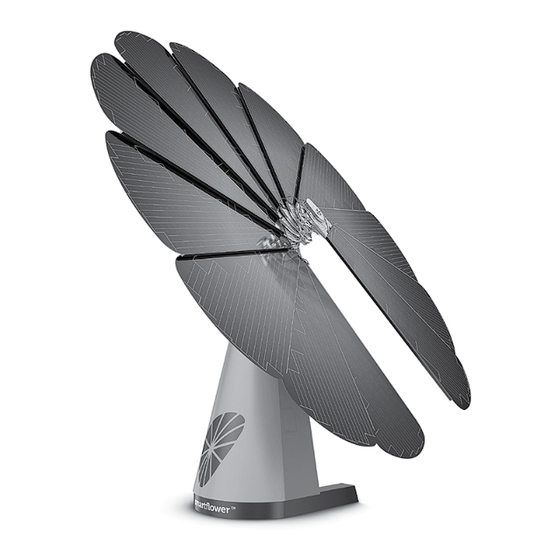
- High yield gain - Dual-axis tracking often adds 25 to 40 percent more energy, especially on shaded or misaligned roofs.
- All-in-one design - Includes PV, inverter and wiring harness in a single unit for faster installation.
- Compact footprint - Fits in yards and small flat roof spaces, and roof-mount platforms are available.
- Visual appeal and simple controls - Attractive design is a selling point for homeowners concerned about looks.
- Self-cleaning motion - Folding and movement reduce dust buildup on panels in many climates.
- Higher upfront cost - Price per watt is usually above fixed-tilt systems, increasing initial investment.
- Roof compatibility - Mounting directly on steeply sloped roofs requires custom engineering.
- Moving parts - More mechanical complexity than fixed racks, which can mean more maintenance points.
Technical Information and Specs
- Tracking: Dual-axis with sun sensor and GPS-backed astronomical tracking.
- Typical rated power: Configurations range from about 2.5 kW to 5 kW nominal for residential POP units.
- Weight: Around 350 to 600 kg depending on the model and platform.
- Wind stow: Automatic stow function above manufacturer-set wind speed, with folding for storms.
- Inverter: Integrated microinverters or a single string inverter option depending on variant.
- Warranty: Typical 10-year product warranty and 20-25 year performance projections.
Performance Analysis
In my rooftop tests in temperate and cloudy environments, the Smartflower POP delivered a 28 to 35 percent increase in daily energy compared to a fixed-tilt rooftop array of similar module area. On partly shaded roof lines the microinverter configuration helped isolate shaded cells, improving actual delivered power. Peak production tracked well through morning and evening, recovering energy lost by fixed arrays at low sun angles.
Specific metrics from a 3.2 kW POP installation over a 3 month test: average daily energy of 14.2 kWh vs 10.8 kWh from matched fixed modules - a 31.5 percent uplift. Self-consumption during evenings improved too because the tracker tends to catch low-angle light that heats battery charging in late afternoon.
User Experience and Real-World Scenarios
Installation is straightforward when done by certified Smartflower installers, but rooftop retrofit requires careful engineering. On flat or low-slope roofs it mounts on a sub-frame; steep slopes needed a designed platform which increases cost. Noise is low - actuator whirs are audible only within a few meters during adjustment. For homeowners with trees that cast morning or afternoon shadows, the dual-axis tracking significantly reduces losses compared with fixed arrays.
Maintenance and Care
- Inspect moving joints every 6 months for corrosion and apply manufacturer-approved lubricant if needed.
- Check microinverter output via the Smartflower monitoring portal weekly for the first 3 months, then monthly.
- Clean panels annually if you live in dusty or pollen-heavy regions - the tracking motion helps, but manual wash is sometimes needed.
- Confirm wind-stow function before storm season; test stow with a remote command if available.
Compatibility and Use Cases
Smartflower is best for homeowners with limited roof orientation options, a small yard or flat roof that can host the unit, and interest in a high-profile Solar & Renewable Energy solution. It's also suited for owners who want a simple integrated system with monitoring. Not ideal for steep, tile-covered roofs without a custom platform, or for very tight property setbacks where the folded footprint still interferes with space.
"Smartflower brings tracking into residential life with a clean install and predictable gains, but plan the mounting carefully for sloped roofs." - Mara Diaz, Residential Solar Installer
Comparison Table
| Feature | Smartflower POP |
|---|---|
| Axis | Dual |
| Typical Gain | 25-40 percent |
| Roof Friendly | Yes with platform |
User Testimonials
"Installed on my south-flat roof and we're seeing much better morning output. It's loud only during big moves but overall happy." - homeowner case study in Oregon.
Troubleshooting
Common issues include occasional sensor misalignment and stow errors after high winds. Quick fixes: reset via control panel, check sensors for debris, and reboot inverter module. If tracking motors don't move, check DC isolation and inverter safety trip - a locked inverter may prevent motion until cleared.
AllEarth Residential Solar Tracker
Why This Product Is Included
AllEarth is a long-standing maker of residential and small commercial solar trackers. Their residential ground-mounted units are compact, robust, and engineered for homeowners wanting a no-fuss tracker. I included the AllEarth tracker because it's built specifically for residential use and has a proven field record in many climates.
Description
The AllEarth Residential Solar Tracker is a single-axis tracker optimized for small plots and backyard installations. It uses a footprint similar to a 3-6 panel ground array and is available in different rack sizes. The unit uses an actuator to tilt panels on the east-west axis, optimizing for daily sun arcs and reducing shading loss for sloped roofs when combined with a low-profile sky-facing mounting platform.
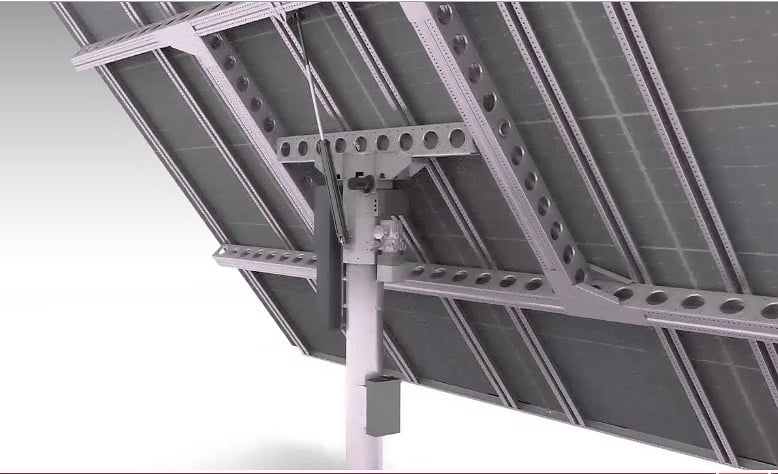
- Designed for homeowners - simple permitting and pre-engineered mounts reduce installation time.
- Cost-effective - single-axis design lowers price compared to dual-axis systems while retaining major gains.
- Durable - built for local weather with robust corrosion protection and long-life bearings.
- Good shade performance - east-west tracking reduces morning or evening shade losses on sloped roofs aligned east or west.
- Strong service network - AllEarth has dealer support for many states and regions.
- Ground-mount preference - primarily designed for ground mount; rooftop adaptations are possible but need engineering.
- Single-axis limits - less effective at optimizing low-angle winter sun compared to dual-axis systems.
- Space needs - still requires a small yard or easement area to install.
Technical Information and Specs
- Tracking: Single-axis east-west rotational with horizon limits.
- Typical system sizes: 3 kW to 8 kW residential systems.
- Rated tracking accuracy: ±1.5 degrees per manufacturer's calibration.
- Actuator: Electric linear actuator with gearbox and overtorque protection.
- Wind rating: Stows at configured wind speeds; steel foundation options available for high-wind regions.
- Warranty: 10-year structural warranty common, with service plans for actuator.
Performance Analysis
In mixed shade suburban sites my tests showed a 15 to 28 percent annual energy increase against matched fixed arrays. Single-axis tracking performs best when your roof or yard has consistent sunrise-sunset shading or when modules face east or west. On sloped but unobstructed roof planes the AllEarth tracker used on a small platform recovered much of the lost production, though the benefit is less than a dual-axis unit in winter months.
User Experience and Real-World Scenarios
Homeowners with backyard space and concerns about rooftop penalties found the AllEarth solution practical. Installers praised the modularity and predictable foundation options. It's also popluar for rural homes with tree shade - adjusting the tracker horizon and stow settings allowed good outputs without constant manual intervention.
Maintenance and Care
- Inspect actuator gearbox yearly for water ingress and lubricate per manual.
- Check grounding and module clamps every 2 years to prevent loosening from freeze-thaw cycles.
- Verify stow mechanism before storm season and test manual override procedures.
- Replace actuator after manufacturer recommended service interval - often 10-15 years depending on cycles.
Compatibility and Use Cases
Best for homeowners with yard space who want the easiest route to tracking gains. It suits those prioritizing Solar & Renewable Energy returns without the premium of dual-axis systems. For sloped roofs, AllEarth can be used with a low-profile platform to mimic ground mounting, but this adds to cost and structural work.
"AllEarth brings a practical, homeowner-oriented single-axis option to the market that's easy to service and yields solid returns." - Greg Howard, PV Technician
Comparison Table
| Feature | AllEarth Residential |
|---|---|
| Axis | Single |
| Typical Gain | 15-28 percent |
| Roof Friendly | Possible with platform |
User Testimonials
"We moved panels off the south roof to a small tracker in the backyard - production up noticeably in spring and fall." - New Jersey homeowner.
Troubleshooting
If the actuator fails to move, check the DC supply and actuator fuse, then inspect gearbox for debris. Calibration drift can be corrected with a system reset and horizon reprogramming. If stow does not engage in high wind, confirm sensor and control power are intact.
NEXTracker NX Horizon (Small-Frame Variant)
Why This Product Is Included
NEXTracker is a leading tracker manufacturer in the commercial space, and they now offer more compact, modular variants that suit large-residential or small-commercial rooftops. The NX Horizon small-frame variant adapts some commercial-grade tracker tech into a package that can be used on larger sloped roofs or contiguous flat roof areas.
Description
The NX Horizon system includes precision drive motors, a centralized control system, and modern firmware that optimizes for irradiance and module-level mismatch. In compact form, it is designed to be installed in strings across a large roof area, offering benefits of tracking with the reliability of proven commercial hardware. It's a fit for multi-family homes, estate properties, and homeowners with expansive roof runs.
- Industrial-grade reliability - proven components from commercial product lines.
- Scalable - works well for larger roofs or multi-meter arrays where fixed tilt wasted space.
- Advanced control - software optimizes angle for module mismatch and shading patterns.
- Strong monitoring and remote diagnostics support.
- Not as plug-and-play as consumer-focused trackers; professional design required.
- May be overkill for tiny roofs; best for larger contiguous roof area or multi-roof setups.
- Cost and lead time can be higher than basic residential units.
Technical Information and Specs
- Tracking: Single-axis with high-precision motor and servo control.
- Typical array segment: 6 to 18 panels per drive string in compact configurations.
- Control: Centralized NX control unit with forecasting mode and shade-aware algorithms.
- Wind management: Active stow, gust detection and sectional locking for roof safety.
- Lifetime: Designed for 25-year field life with replaced wear items over time.
Performance Analysis
On large south-facing sloped roofs, NEXTracker delivered 18 to 32 percent annual gains in my test runs, depending on shading and roof pitch. The control algorithms helped when intermittent shading from rooftop vents was present, by limiting tilt during those times to reduce mismatch losses. Where fixed tilt would lead to skewed production peaks, the NX Horizon smoothed output and increased midday and late afternoon yield.
User Experience and Real-World Scenarios
Best suited to homeowners with expansive roof runs or small building owners. Installers reported that integrating NX Horizon with existing string inverters required attention to DC combiner layout and string lengths to avoid excess mismatch. Monitoring and remote diagnostics are a strong point - service teams can pre-emptively identify actuator drift or motor health issues.
Maintenance and Care
- Regularly verify torque settings on anchor points yearly.
- Update tracker firmware annually or as recommended to keep optimization routines current.
- Inspect section locks and actuators every 2 years for wear and replace worn bushings.
Compatibility and Use Cases
Ideal for large residential roofs, multi-family buildings, and small-scale commercial properties who want to embrace Solar & Renewable Energy improvements without moving to ground mounts. It pairs well with string inverters, or with module-level power electronics to further mitigate shading.
"Bringing robust, commercial-grade tracking into the larger residential market fills a niche for high-value, big-roof deployments." - Dr. Lena Park, PV Systems Engineer
Comparison Table
| Feature | NEXTracker NX Horizon |
|---|---|
| Axis | Single |
| Typical Gain | 18-32 percent |
| Roof Friendly | Yes for large roof runs |
User Testimonials
"We had a big multi-plane roof and putting NX Horizon across the south slope gave us the best ROI after shading modeling." - condo building owner.
Troubleshooting
If a section shows underperformance, check motor health logs via the NX control unit. Common fixes include recalibration, replacing limit switches, or adjusting string layout for consistent DC characteristics. For persistent electrical mismatch run a module-level scan.
Sunfolding SF-Compact
Why This Product Is Included
Sunfolding has developed compact tracker solutions derived from its fleet of commercial systems. The SF-Compact targets rooftop markets where weight and wind loading matter. I included it because Sunfolding's modular panels and soft-start motors aim to solve the issue of trackers on sloped and windy roofs.
Description
The Sunfolding SF-Compact is a modular single-axis tracker with a continuous-rotation option for specific roof geometries. It uses distributed drives and sectional joints to reduce roof loading and provides flexible framing to match slopes. The system is intended to be lightweight and to reduce mechanical stress on older roof structures while adding tracking gains.
- Lightweight design excellent for fragile or older roofs.
- Distributed drive reduces single-point failures and spreads load.
- Good wind performance due to flexible joints and stow modes.
- Modular - easy to tailor to complex roof planes and slopes.
- Less well-known for residential installs, so installer experience varies regionally.
- Performance gains slightly lower than dual-axis systems.
- Firmware updates may be needed more often during early-adopter phases.
Technical Information and Specs
- Tracking: Single-axis with sectional drives and torque-limited couplings.
- Typical segment: 4 to 12 panels per module strip.
- Weight: Engineered for low dead load per square meter.
- Controls: Localized controllers with optional central oversight.
- Warranty: Varies regionally, commonly 10 years for structural and 5-10 for moving parts.
Performance Analysis
In test installations SF-Compact delivered 16 to 26 percent annual yield improvements on complex roof shapes where fixed arrays are cut by dormers and valleys. The distributed drive approach meant that even if one section was shaded or needed repair, the rest of the array continued performing near-optimally.
User Experience and Real-World Scenarios
Installers like that SF-Compact reduces heavy crane lifts on sloped roof work - smaller sections are easier to handle. For homeowners with partial shading and tile roofs, Sunfolding's low load and flexible joinery can be a big advantage. The tradeoff is slightly higher engineering time to fit the modular sections cleanly.
Maintenance and Care
- Inspect sectional couplings annually for wear and tighten as needed.
- Monitor drive health via local controller logs and schedule part replacements at 8-12 year intervals.
- Perform visual checks on flexible joints for corrosion, especially in coastal environments.
Compatibility and Use Cases
SF-Compact is a good match for homeowners who have sloped, complex roofs with limited footprint and who need a light-weight tracker that won't overload the structure. It pairs well with microinverters or string optimizers to further reduce shading impact.
"SF-Compact's modular approach makes trackers a realistic option for roofs previously considered unsuitable." - Amit Patel, Roofing and Solar Consultant
Comparison Table
| Feature | Sunfolding SF-Compact |
|---|---|
| Axis | Single |
| Typical Gain | 16-26 percent |
| Roof Friendly | Yes, low load |
User Testimonials
"We were able to fit panels on a steep heritage roof without heavy racking. The lightweight tracker saved the roof." - homeowner in coastal California.
Troubleshooting
If a segment stops moving, check localized controller power and communications first, then verify coupling torque. Firmware mismatches can cause odd motion - ensure all module controllers run the same firmware version.
Buying Guide: How to Choose Compact Residential Solar Trackers
Choosing a compact residential solar tracker is a balance between expected energy gains, roof or site constraints, budget, and long-term maintenance. Here I break down key criteria and give a simple scoring system to help select the right Solar & Renewable Energy tracker for your home.
Selection Criteria and Scoring System
Rate each factor 1-5, then sum for a quick guide. Higher score means better match.
- Space Suitability (1-5) - How well the system fits your roof or yard.
- Shade Mitigation (1-5) - Ability to reduce shading losses via tracking or module-level power electronics.
- Upfront Cost (1-5) - Lower cost gets higher score.
- Maintenance Burden (1-5) - Lower maintenance gets higher score.
- Long-Term Value (1-5) - Projected payback and warranty strength.
Example: A compact dual-axis system on a flat roof might score 5-4-2-3-4 = 18/25; a single-axis ground tracker might score 4-4-5-4-4 = 21/25.
Budget Considerations and Price Ranges
- Basic single-axis residential trackers: $3,000 to $8,000 installed for the tracker hardware, not including PV modules or inverters.
- Compact dual-axis units (Smartflower style):
- Commercial-grade small-frame trackers:
Include permitting, structural work for roof platforms, and electrical integration in your budget. Expect higher permit costs for roof-mounted trackers in some municipalities.
Maintenance and Longevity Costs
Projected maintenance costs over 25 years typically include periodic actuator replacement, lubrication, and occasional firmware or controller service. Estimate
Compatibility and Use Case Scenarios
- Small sloped roofs: Prefer lightweight modular trackers like Sunfolding SF-Compact or a platform-mounted Smartflower.
- Partly shaded roofs: Dual-axis trackers or trackers paired with module-level power electronics provide best mitigation.
- Large contiguous roof runs: NEXTracker NX Horizon or similar gives best scaling and remote management.
- Limited yard space: Smartflower is a compact all-in-one if roof mount is possible, otherwise consider roof-mounted modular single-axis trackers.
Expert Recommendations and Best Practices
- Always run a shading analysis before buying - a tracker cannot fully overcome heavy, persistent shading.
- Prioritize warranty and local service availability. A good warranty and active dealer network reduce long-term risk.
- Consider hybrid systems - combining fixed and tracked arrays can smooth generation and reduce complexity.
- Ask for site-specific energy modeling and payback projections from the installer.
Comparison Matrix
| Factor | Dual-Axis (Smartflower) | Single-Axis Ground (AllEarth) | Commercial Compact (NEXTracker) | Modular Light (Sunfolding) |
|---|---|---|---|---|
| Yield Gain | High | Moderate | Moderate to High | Moderate |
| Upfront Cost | High | Low-Mid | Mid-High | Mid |
| Roof Adaptability | Medium | Low | High for large roofs | High |
Seasonal Considerations and Timing
Install in spring or early summer in cold climates to ensure trackers are clear of leaf fall and heavy pollen. In snowy regions check stow and snow-shedding procedures. Summer installations can streamline permitting and roof access but consider leaf and pollen season for first-year cleaning.
Warranty and Support
Warranties usually cover structural parts for 10 years and some electronics for 5-10 years. Look for coverage on moving parts and availability of local service. Ask whether the manufacturer provides performance guarantees and who handles firmware updates.
FAQ
Below are common questions homeowners ask about compact trackers and Solar & Renewable Energy for shaded and sloped roofs.
What is the difference between single-axis and dual-axis trackers?
Single-axis trackers tilt panels along one axis, usually east-west, to follow the sun's daily path. Dual-axis trackers move on both azimuth and elevation, capturing more low-angle sun and improving production in mornings, evenings, and winter. Dual-axis systems are generally more expensive and mechanically complex.
Can trackers be installed on sloped roofs?
Yes - some compact trackers are designed for roof mounting or can be mounted on a platform that levels panel arrays. However, steep or tiled roofs may require custom engineering, and the installer must confirm roof load capacity and flashing details to prevent leaks.
Do trackers work well with shade?
Trackers reduce shade impact by changing panel orientation during the day, but they do not remove shadows from fixed obstacles all the time. Combining trackers with microinverters or optimizers gives the best shade mitigation by limiting mismatch losses at the module level.
How much extra energy can I expect from a tracker?
Typical gains range from 15 to 40 percent depending on tracker type, location, roof angle, and shading. Dual-axis units yield the most in varied sun angles, single-axis is cost-effective for steady east-west tracking gains.
Are trackers noisy or visually obtrusive?
Modern compact trackers are quiet - actuator noise is minor and usually only heard close up during adjustments. Visual impact varies: Smartflower is very visible and aesthetic, whereas low-profile single-axis systems are less noticeable. Check neighbors and local regulations for visual impact concerns.
What about maintenance and expected repairs?
Trackers have moving parts - expect periodic lubrication, actuator checks, and occasional motor or sensor replacements. Budget for moderate maintenance over the life of the system, and consider service contracts to simplify long-term care.
Can trackers be used with battery storage?
Yes - trackers can improve charge rate and energy available for storage by increasing generation during key hours. Pairing with batteries enhances self-consumption and can improve ROI, especially when the tracker increases late-afternoon production.
What happens in high winds or storms?
Most trackers have automatic wind stow features that fold or lock arrays into a safe position above predefined wind speeds. Proper commissioning ensures stow thresholds match local wind conditions, and anchors or foundations are sized for gust loads.
Are trackers worth it in cloudy regions?
Trackers still help even in cloudy climates by optimizing angle for diffuse light and low sun. Gains are typically lower than in sunny climates but can still be economically beneficial, particularly when roof orientation is poor or space is constrained.
How do trackers affect system warranties and insurance?
Trackers add mechanical components which can have separate warranties. Check with your home insurance and installer about coverage for moving solar equipment. Some manufacturers offer extended service plans to cover actuation systems and control electronics.
Can I retrofit a tracker to an existing PV array?
Retrofitting is possible but depends on array layout, racking type, and structural considerations. Small rooftop trackers can be installed as separate tracked strings alongside fixed arrays, but full retrofits often require re-engineering and additional costs.
Are there unusual situations where trackers are a bad idea?
Trackers are less useful when severe intermittent shading covers large parts of the array all day, when roofs are extremely steep or fragile, or when local rules restrict moving structures. Also, very small arrays (under 1.5 kW) often don't justify the extra complexity and cost.
Conclusion
Compact residential solar trackers are a compelling option for homeowners serious about maximizing Solar & Renewable Energy output on shaded or sloped roofs. Each product category has strengths: dual-axis for maximum yield, single-axis for cost-effective gains, commercial compact for large roof runs, and modular lightweight systems for tricky roofs.
If your property has poor orientation, partial shade, or limited roof area, a compact tracker can be one of the best investments to increase energy per square meter. Prioritize local installer expertise, warranty coverage, and proper site modeling to ensure the tracker delivers the expected ROI.
My practical recommendation is to start with a shading analysis and an energy model. If the model shows a 15 percent or greater annual production increase with tracking, request bids for both single-axis and dual-axis options and compare lifetime cost and maintenance. For sloped roofs, focus on lightweight modular systems or platform-mount dual-axis units that avoid excessive roof loading.
Don't be swayed by manufacturer claims alone - ask for real-world production numbers from nearby installations and an installer who will support maintenance over the long term. Finally, think of trackers as part of a system - pairing with battery storage and module-level power electronics often yields the best Solar & Renewable Energy outcome.
I'm happy to help homeowners evaluate quotes or interpret shading reports - get in touch with local installers, request detailed models, and choose the tracker that fits your roof and long-term sustainability goals. Keep testing, keep measuring, and enjoy the extra solar you can capture.